Indian summers are not mild. They are loud, persistent, and completely uninterested in your glass façade or imported tiles. Long before air conditioners existed, homes across India were already designed to stay cool using climate intelligence, not electricity.
That design wisdom is called traditional Indian architecture, and it remains one of the most effective solutions for summer living even today.
This isn’t nostalgia. It’s physics, climate response, and common sense working together.

Understanding Traditional Indian Architecture
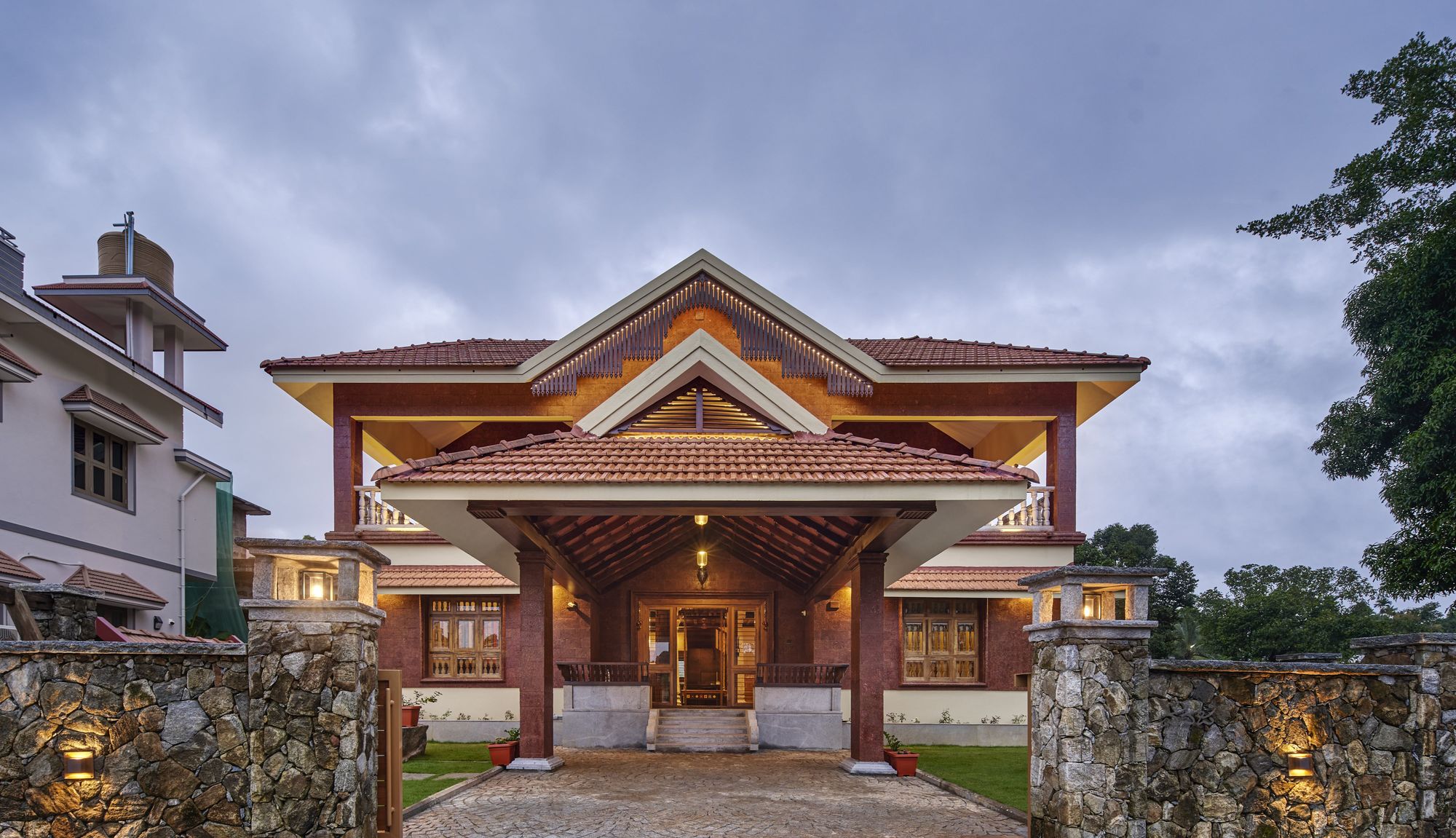
Traditional Indian architecture refers to region-specific building styles developed over centuries to suit local climate, materials, and lifestyle. From Chettinad homes in Tamil Nadu to havelis in Rajasthan and nalukettu houses in Kerala, these structures were designed to work with nature, not fight it.
Key principles included:
- Passive cooling
- Natural ventilation
- Climate-responsive materials
- Shaded spaces and courtyards
- Minimal heat absorption
The result was homes that stayed comfortable even during peak summer, without mechanical cooling.
Courtyards: The Original Cooling System
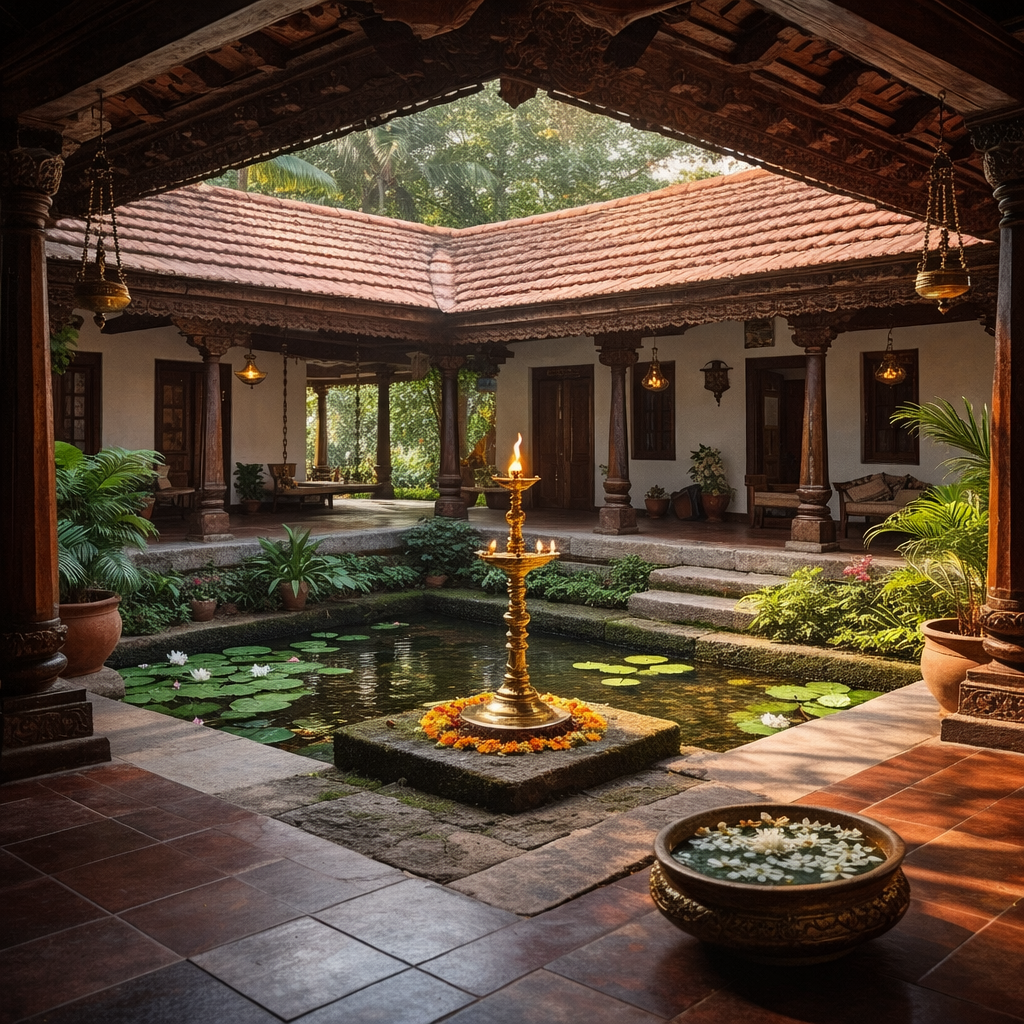
One of the most iconic features of traditional Indian homes is the central courtyard.
Courtyards act as natural ventilation shafts. Hot air rises and escapes upward, while cooler air is drawn into surrounding rooms. This continuous air movement reduces indoor temperature and improves air quality throughout the house.
In summer:
- Courtyards release trapped heat
- Promote cross ventilation
- Allow daylight without direct heat
- Create shaded, cooler microclimates
Modern homes often eliminate courtyards for “extra carpet area” and then spend years paying for that decision through electricity bills.
Thick Walls That Actually Make Sense
Traditional homes used thick walls made from materials like mud, stone, brick, or lime plaster. These walls had high thermal mass, meaning they absorbed heat slowly and released it gradually.
During summer:
- Walls prevent heat from entering during the day
- Interiors remain cool for longer periods
- Heat absorbed is released at night when temperatures drop
Compare this to thin concrete walls that heat up quickly and radiate warmth inward like a slow betrayal.
Natural Materials That Stay Cool
Traditional Indian architecture relied on locally available materials that were naturally heat-resistant.
Common materials included:
- Mud and clay
- Lime plaster
- Natural stone
- Terracotta tiles
- Wood
These materials breathe. They regulate temperature and humidity instead of trapping heat. Unlike synthetic finishes, they do not amplify heat or create indoor discomfort.
This is why traditional flooring like stone or oxide feels cooler underfoot even on the hottest afternoons.
High Ceilings and Sloped Roofs
Hot air rises. Traditional architecture understood this without needing diagrams.
High ceilings allowed hot air to move upward, keeping living spaces cooler. Sloped roofs with clay tiles further reduced heat transfer and allowed ventilation gaps for escaping heat.
Benefits:
- Reduced indoor heat buildup
- Better air circulation
- Less dependency on fans and ACs
Low ceilings may look modern, but they trap heat efficiently. Too efficiently.
Cross Ventilation Done Right
Traditional homes were masters of cross ventilation. Windows, doors, jaalis, and openings were aligned to allow air to flow freely across spaces.
Instead of sealing homes shut, designs encouraged:
- Multiple openings on opposite sides
- Perforated screens for airflow
- Transitional spaces like verandas
This ensured continuous air movement, flushing out heat and humidity naturally.
Modern homes often have windows, but without airflow planning, they function more as decoration than ventilation.
Verandas, Overhangs, and Shaded Spaces
Direct sunlight is heat’s favorite delivery method. Traditional architecture blocked it strategically.
Key shading elements included:
- Deep verandas
- Extended roof overhangs
- Jaalis and pergolas
- Trees integrated into design
These features prevented direct solar heat from entering interiors while allowing light and airflow. Smart shading reduced indoor temperature dramatically without darkening spaces.
Climate-Specific Design, Not One-Style-Fits-All
Traditional Indian architecture was never uniform. It adapted to regional climates.
Examples:
- Rajasthan homes focused on thick walls and enclosed courtyards to fight extreme heat
- Kerala homes used sloped roofs and open layouts for humid climates
- South Indian homes emphasised courtyards, shaded corridors, and ventilation
Modern architecture often ignores this and imports designs unsuited to Indian weather. The climate notices. Immediately.
Energy Efficiency Before It Was a Buzzword
Traditional homes were inherently energy-efficient. They required minimal mechanical cooling, reduced power consumption, and maintained comfort naturally.
In today’s context, this means:
- Lower electricity bills
- Reduced carbon footprint
- Long-term sustainability
- Healthier indoor environments
Traditional design aligns perfectly with modern goals of sustainable and climate-responsive architecture.
Can Traditional Principles Be Used in Modern Homes?
Yes. And they should be.
You don’t need to live in a heritage home to benefit from traditional design. Courtyards, ventilation planning, natural materials, shading, and orientation can all be adapted into modern layouts.
Whether building new or renovating, integrating traditional architectural principles can drastically improve summer comfort without compromising modern aesthetics.
Why Traditional Indian Architecture Matters Today
As summers get hotter and energy costs rise, the need for naturally cool homes is no longer optional. Traditional Indian architecture offers time-tested solutions that are practical, sustainable, and deeply suited to Indian living conditions.
This isn’t about going backward. It’s about being smart enough to keep what works.
Planning a home that stays cool without fighting the climate?
Design with principles that have already survived centuries of Indian summers. Contact us now